.png?width=2000&height=2000&name=Classroom%20Technology%202chnology%202%20(1).png)
Education increasingly relies on technology to serve more diverse student bodies, enhance learning experiences, and provide more learning opportunities with hybrid and remote courses.
Existing and emerging technologies are making classrooms more inclusive and engaging for both in-person and remote students. By updating your edtech, you can improve student recruitment, retention, experiences, outcomes, and job placement.
The technology you choose for a classroom or lecture hall will depend on the physical features of the space, as well as the subjects taught there and whether the room will serve a remote, in-person, or a mix of students. However, these are the basic tools that most learning spaces need:

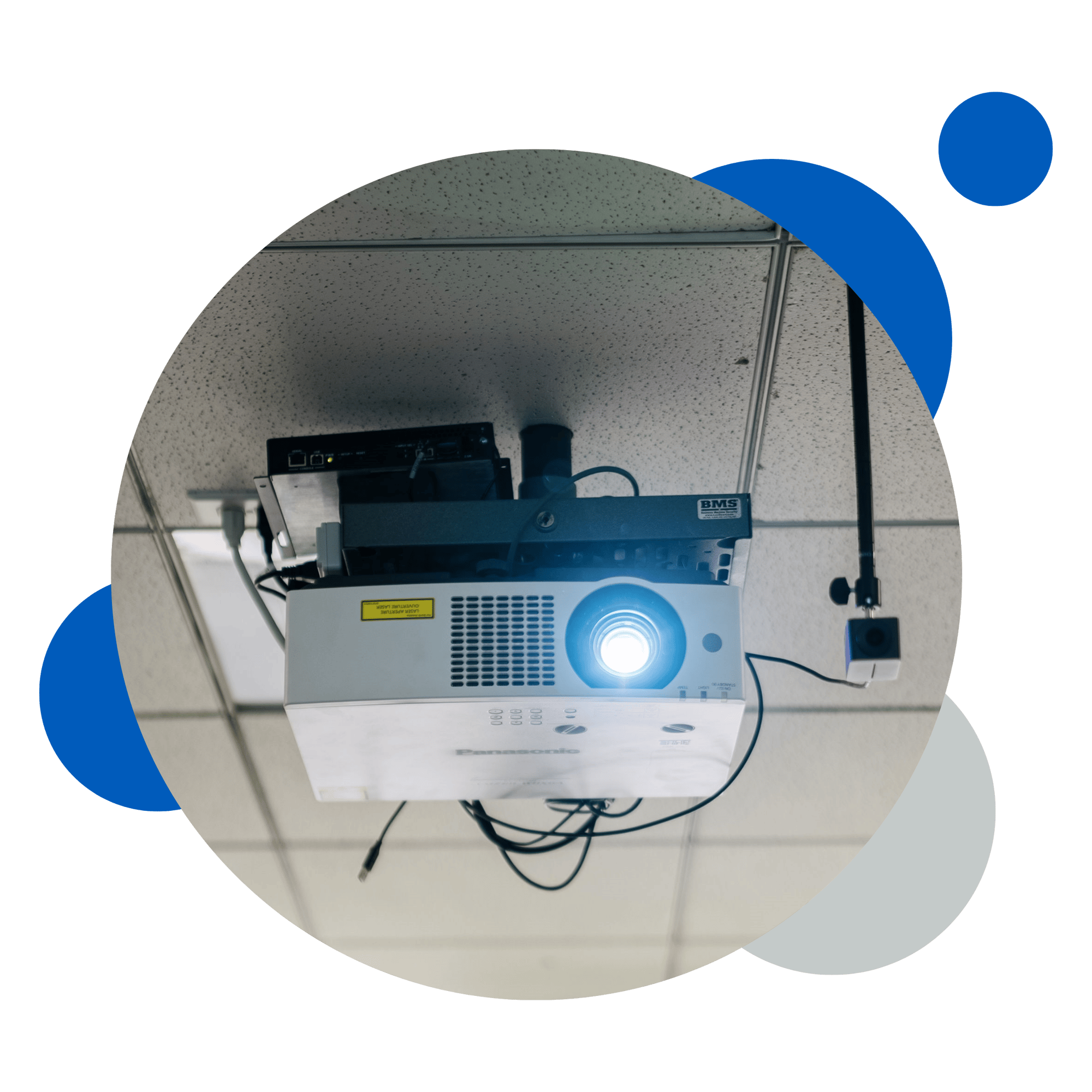
Projectors are still effective and popular tools for presenting information to the class via computer, laptop, or document camera onto a larger screen.

Digital whiteboards have replaced traditional blackboards, allowing instructors to write, annotate, and interact with content directly on the board.

These cameras digitalize and project documents or printed materials like textbooks, drawings, or experiments onto a screen.

Automated tracking features ensure the camera follows the instructor or presenter without the need for a camera operator.

These systems record and store lecture audio and video so students can video presentations on demand.

Quality microphones and speakers that provide clear audio ensure that both instructors and students can hear lectures and discussions, especially in large lecture halls.
Grants may be available for eligible organizations including schools, libraries, museums, government, and non-profits.

Experience projection screens like never before. SightLine’s sleek cable suspension creates a floating effect that seamlessly blends into any space, perfect for modern multipurpose environments. Discover the innovative Myriad™ system with sizes up to 16 feet and HD-ready surfaces!
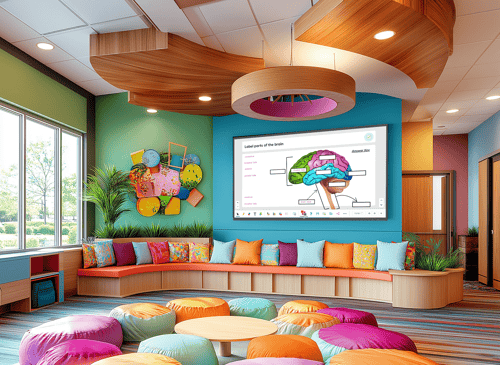
Schools need the most modern technology to successfully prepare students for high-tech fields and the many industries using state-of-the-art solutions. These technologies also allow students to have learning experiences that would be impossible in an outdated classroom setting. Here are some of the emerging trends and innovations in educational technology.

Extended Reality (XR): Integrating virtual reality (VR), augmented reality (AR), and mixed reality (MR) capabilities into your teaching toolbox helps bring complex and abstract concepts to life. Use XR technologies to take virtual field trips to historical sites, simulate healthcare procedures, develop 3D prototypes, test student skills, rehearse artistic performances like everyone is in the same room, and more.
Haptic Technologies: Make simulations and other learning experiences more realistic by introducing haptic learning. When interacting with virtual objects, students feel feedback in the form of pressure, vibration, or movement. For example, performing an engineering experiment or virtual medical procedure can give students an idea of how much force to apply or expect in real life
Smart Devices and Sensors: These tools are on their way to becoming ubiquitous in classrooms. Intelligent furniture, adaptive lighting, environmental sensors, and other technologies will integrate to personalize learning environments and respond to student needs.
Global Collaboration and Exchange: The right technology can facilitate virtual exchange programs and immersive language learning, offering students greater intercultural experiences and understanding.
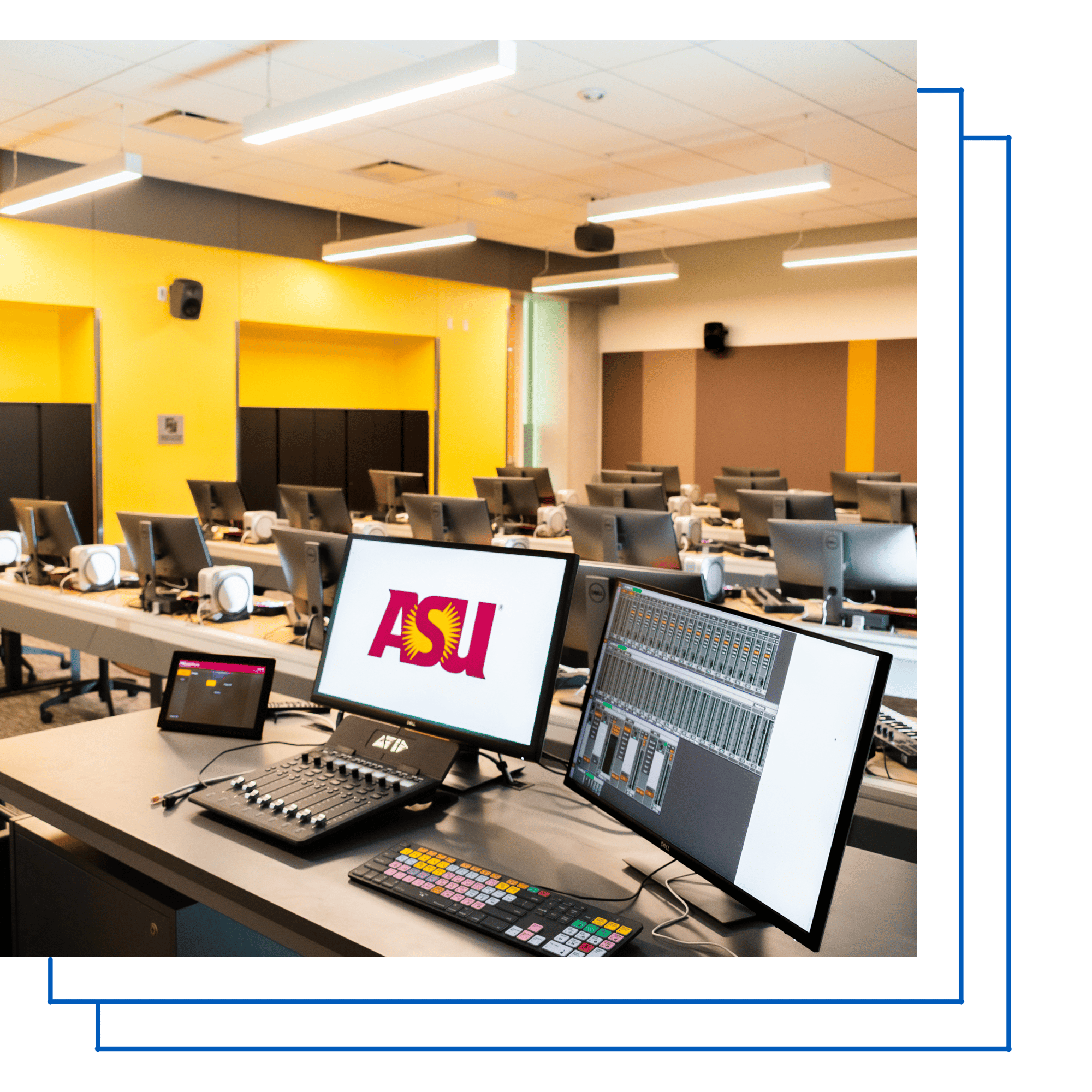

Generative AI (GenAI) and predictive AI are already at work in many classrooms, but this technology is poised to take on even more tasks in education. AI will power hyper-automation, teaching holograms, and learning experience platforms (LXPs) to individualize learning, analyze data, and more.
With modern technology, institutions can provide learning access to more students, create positive and exciting classroom experiences, and give educators the tools they need to prepare students for life after school.





.png?width=216&height=60&name=Logos%20for%20Website%20(8).png)